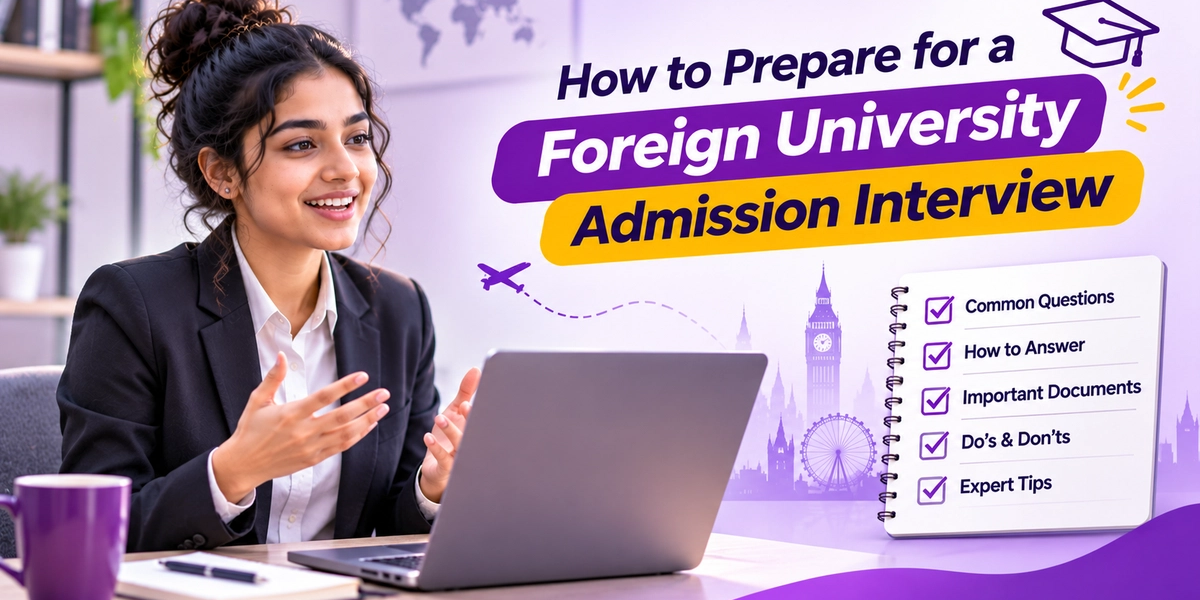
You've applied, your documents are in, and then an email arrives: "We would like to invite you to an interview."
For many students, this is the moment the nerves kick in. What will they ask? Will your English be good enough? What if your mind goes blank? Almost everyone feels this way, and the good news is that interviews are far easier to handle when you know what to expect and have practised.
This guide covers the basics in plain language: the types of interviews you might face, what interviewers are really looking for, common questions, and simple ways to prepare. It's written in November 2026. Interview requirements differ by country and university, so always follow your own invitation and official guidance. If you'd like advice for your own situation, Cliftons Study Abroad is happy to help, including through our special mock interview section, described below.'
Which Interview Might You Face?
"Admission interview" can mean several different things. Knowing which one applies to you makes preparation much easier.
1. A university academic interview. Some courses, especially competitive or professional ones, interview applicants about their subject knowledge, motivation, and suitability. This is more common for areas such as nursing, medicine, teaching, MBA programmes and some research degrees.
2. A pre-CAS (or similar pre-admission) interview. Some UK universities hold a short video interview before issuing the CAS, the document you need for a student visa. It aims to confirm that you're a genuine student who understands your course, funding, and plans. Some universities require this for applicants from certain countries, including India, but practice varies by university.
3. A visa credibility interview. In some systems, an immigration officer may interview an applicant to check genuine student intent. In the UK, this is separate from the university's own interview, and it isn't held for every applicant.
4. A national application interview. For some destinations, there's an interview built into the application process. For example, Indian applicants using France's Études en France procedure usually have an interview with Campus France before the visa stage.
Each interview is different, but they all test the same basic things: that you understand what you've applied for, that your story makes sense, and that you're prepared.
What Interviewers Are Really Looking For
Whatever the type, interviewers usually want to see four things.
You're genuine. You have real reasons for choosing this course, this university and this country.
You're prepared. You know what you applied for, rather than picking a course at random.
You're consistent. What you say matches your documents: your application, statement, marks and finances.
You can communicate. You can explain your ideas clearly in English. Perfect grammar isn't the goal. Clarity is.
Keep these in mind, and many of the specific questions will feel easier.
Step 1: Know Your Own File
The most common reason students struggle is that they haven't looked closely at their own application. Before the interview, review:
- Your statement of purpose. Be ready to talk about anything you wrote.
- Your marks and background. Know your course, grades, any gaps or backlogs, and how to explain them honestly.
- Your documents. Dates, figures, and names should match what you'll say.
- Your offer or CAS details. University, Course name, start date, fees
- Your finances. Who is paying, how much, and where the money comes from. If you're using a loan, our basics guide to education loans for studying abroad explains the essentials.
Keep one set of numbers in your head, and use the same figures every time. If you say one amount in one answer and a different amount later, it can raise doubts, even if you simply forgot.
Step 2: Know Your Course and University
Specific answers sound far more genuine than general ones. Research:
- The course: its modules, how it's taught and assessed, and what interests you about it
- The university: its location, facilities and anything specific that attracted you
- The country and city: why you chose it, and a little about daily life there
- How the course connects to your background: why this next step makes sense for you
If you chose the university carefully, you should be able to explain why. Our guide to choosing the right university abroad shows you how to build that reasoning.
Common Questions to Practise
Questions vary, but they usually fall into a few themes. Here are examples to practise out loud.
About you
- Tell me about yourself.
- Why did you choose your previous course?
- Can you explain any gap in your studies? (Be honest and clear.)
About your course
- Why did you choose this course?
- Which modules are you most interested in, and why?
- How does this course connect to what you studied before?
About the university and country
- Why this university?
- Why this country instead of studying in India or elsewhere?
- What do you know about the city where you'll live?
About your finances
- How will you pay your tuition and living costs?
- Who is sponsoring you, and what do they do?
- What will you spend on rent, food and travel?
About your plans
- What do you hope to gain from this course?
- What are your goals for the future?
- How will you manage living abroad and studying independently?
About rules and responsibilities
- Do you know how many hours you can work while studying?
- What would you do if you faced difficulty with your studies?
For the work question, our guide to part-time work abroad explains why it's important to understand your visa limits.
How to Answer Well
Be specific. Instead of "The UK has great education," say what you like about this particular course and how it fits what you've studied.
Be honest. Never invent answers, exaggerate or memorise a script that isn't true. If something in your history isn't perfect, such as a gap or a backlog, explain it simply and truthfully. Our guide to common student visa rejection reasons explains why honesty and consistency matter.
Keep answers short and clear. Aim for answers of about 30 to 60 seconds. Give your main point, one reason, and, if you can, one example.
Use your own words. Memorised answers often sound unnatural, and interviewers can usually tell. Learn the key points, not whole paragraphs.
Listen carefully. Answer the question you're asked. If you didn't understand, politely ask for it to be repeated.
Stay calm if you pause. It's fine to take a moment to think. A short pause sounds better than a rushed, confused answer.
Be honest about your plans. If you're asked about what comes after your course, answer truthfully, and keep the focus on how your studies fit your goals.
If Your Interview Is Online
Many interviews are held by video. Prepare the practical side too.
- Test your technology. Check your camera, microphone, internet and the platform the university uses, well before the interview.
- Choose a quiet, well-lit spot. Face a window or lamp, and avoid noise and interruptions.
- Check your background. Keep it plain and tidy.
- Have your documents handy. Keep your passport, offer letter and any papers within reach, but don't read answers from a script. Some interviews don't allow notes, and reading is easy to notice.
- Look at the camera. It helps you appear engaged.
- Dress neatly. Choose smart, simple clothing.
- Have a backup plan. Keep a phone with data nearby and know who to contact if your connection fails.
- Be on time. Log in a few minutes early.
On the Day: A Simple Checklist
- Sleep well and eat something light.
- Re-read your statement and key figures one more time.
- Prepare your identification and documents.
- Keep water nearby.
- Take a few slow breaths before you start.
- Greet the interviewer politely and speak at a steady pace.
- Smile, be yourself, and remember that interviewers want you to do well.
Common Mistakes to Avoid
- Not reading your own application. You need to know what you wrote.
- Giving generic answers. "Good education" and "good exposure" say very little.
- Contradicting your documents. Check figures and dates in advance.
- Memorising a script. It sounds rehearsed and can fall apart if the questions change.
- Not knowing basic details about the course or university. It can suggest you applied without much thought.
- Exaggerating or inventing. Honest answers are safer and more convincing.
- Poor setup for online interviews. Technical problems create unnecessary stress.
- Not practising out loud. Thinking an answer and saying it are very different.
Practise With Cliftons' Special Mock Interview Section
Reading about interviews helps, but the best preparation is practice. That's why Cliftons Study Abroad offers a special mock interview section for students.
A mock interview lets you practise answering real-style questions in a realistic setting before the actual interview. It helps you get used to speaking out loud, spot where your answers feel unclear or too general, and build confidence so the real thing feels less intimidating. It's also a good way to check that your answers about your course, your finances and your plans are consistent with your documents.
If you've been invited to an interview, or you want to get ready in advance, ask our counsellors about the mock interview section.
After the Interview
When it's over, take a breath. Note down any questions that surprised you, since that's useful for later. Follow any instructions about next steps, and check your email for any follow-up requests, such as extra documents. If you're waiting for a decision, be patient, and avoid contacting the university repeatedly. If something went wrong in the interview, ask your counsellor what options exist before taking any action.
Need More Than the Basics? Talk to Cliftons Study Abroad
This guide covers only the basics. Every university and country has its own interview style, and the right preparation depends on your course, your background and your plans. A counsellor can help you work out which interview you might face, what to expect and how to prepare.
At Cliftons Study Abroad in Kochi, we help students across Kerala from choosing a course to preparing for admission and visa steps, including our special mock interview section. If you'd like personal guidance, our counsellors are ready to help.
Invited to an admission interview and want to practise? [Contact Cliftons Study Abroad today for a free consultation and ask about our mock interview section.]